Flat Roof Repair, TPO, EPDM & Torch-Down | East Bay Roofers
Low-Slope Systems That Actually Work
Flat and low-slope roofing for East Bay homes and commercial buildings. TPO, EPDM, modified bitumen. Free assessment. Call (925) 722-4916.
Call (925) 722-4916 NowFlat Roofing in the East Bay
East Bay Roofers is the East Bay's licensed roofing contractor that homeowners and property managers call for flat and low-slope roofing Since 1988, we've installed TPO, EPDM, and modified bitumen systems for homes and businesses in Emeryville and across the East Bay. Here's what that looks like in practice:
Engineered Drainage
Tapered polyiso creates positive slope to drains. Ponding water, the number-one killer of flat roofs, gets designed out from the start.
Title 24 Cool Roof
White TPO and PVC membranes reflect 80%+ of solar radiation and meet California's mandatory cool-roof thresholds without add-on coatings.
Usable Space
Flat roofs carry solar, HVAC, rooftop decks, and green-roof assemblies. Your roof turns into functional square footage instead of dead space.
Easy Access
No harnesses, no steep-slope gear. Inspections, drain cleaning, and repairs happen faster and safer than on any pitched roof.
What Is a Flat Roof, Really
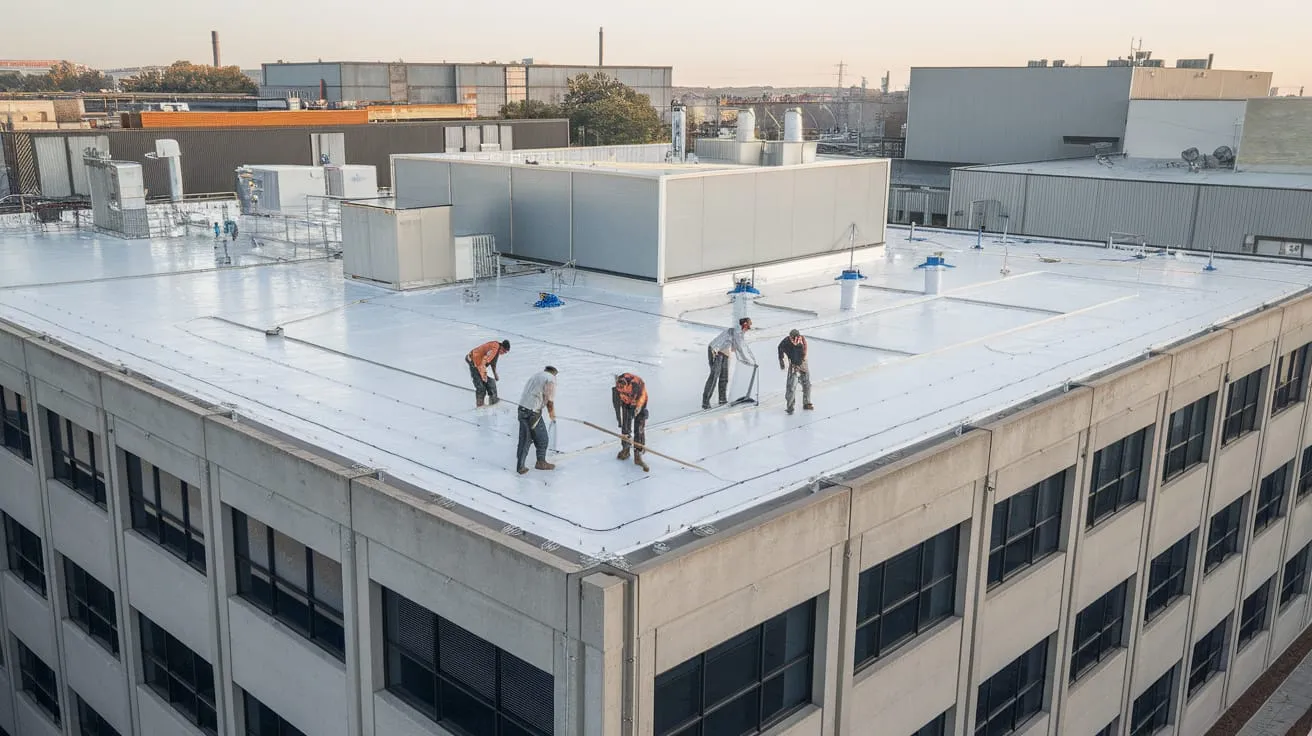
A "flat" roof isn't actually flat. Under California Residential Code, anything with a slope less than 2:12 is classified as low-slope, and that's the category we're talking about. Even a roof that looks dead level to the naked eye has a quarter-inch-per-foot pitch built in, that's the minimum the code requires under CRC R905.11 through R905.14, and it's the minimum we'll install. Anything less, and water sits instead of moving. The system itself is a stack, not a single layer.
From the deck up, you've got insulation (usually polyisocyanurate boards, tapered to create slope), a cover board like DensDeck that protects the foam from foot traffic and fasteners, then the waterproofing membrane itself, TPO, EPDM, PVC, modified bitumen, or a multi-ply built-up system. Each layer has a job. Skip one, and the roof still works, until it doesn't.
When a Flat Roof Makes Sense
Flat roofs aren't a compromise. They're the right answer for a lot of situations. Room additions. When you push a bedroom out into the side yard and can't tie into the existing pitched roof without a structural nightmare, a low-slope membrane over the addition is the cleanest solution. We see this constantly in West Oakland Victorians where the original house has a steep hip roof and the 1970s addition has a flat section bolted onto the back. Mid-century modern homes. Berkeley Hills, Kensington, and parts of El Cerrito have entire streets of Eichler-era architecture where the flat roof is the design. You don't put shingles on an Eichler. You replace the original built-up roof with a modern single-ply and keep the house looking right. Commercial and multi-family. Almost every low-rise commercial building in Emeryville, downtown Walnut Creek, and the Richmond Iron Triangle is flat-roofed.
That's not an accident, it's cheaper to build, it gives you a mechanical platform, and it opens up solar real estate. Garages, carports, and covered patios. You don't need to complicate a 400 sq ft garage roof with valleys and hips. A modified bitumen cap sheet or a small TPO section does the job for a fraction of the cost.
Brands and Product Lines We Install
We're not married to a single manufacturer.
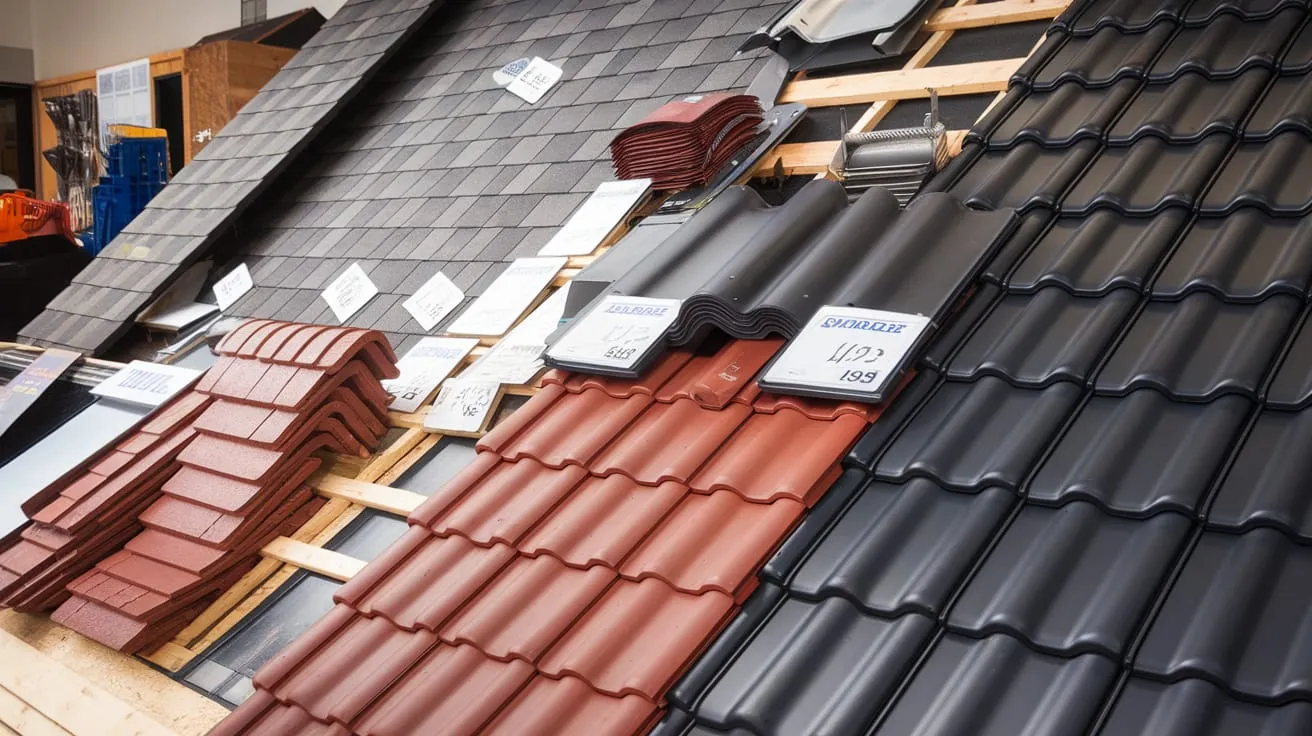
The right material depends on the deck, the slope, the exposure, and the budget. That said, here's what we actually keep on the truck. - Firestone/Holcim, UltraPly TPO and RubberGard EPDM. Firestone got absorbed into Holcim a couple years back, but the product lines are unchanged and the warranty is still solid. RubberGard is the single biggest EPDM product in the country and has been for 40 years.
- GAF Commercial, EverGuard TPO and EverGuard PVC, plus Ruberoid SBS and APP modified bitumen. We install GAF systems to manufacturer spec so they qualify for the strongest warranty coverage available.
- Carlisle SynTec, Sure-Weld TPO and Sure-Seal EPDM. Carlisle is the installer's favorite. Their detail accessories are the best in the industry, and their Syntec warranty process is straightforward.
- Johns Manville, JM TPO, JM EPDM, and DynaGlas modified bitumen. JM makes the insulation too, so you can spec a single-source warranty that covers the whole stack.
- Versico, VersiWeld TPO and VersiGard EPDM. Same parent as Carlisle, slightly different pricing.
- Soprema, SOPRALENE SBS modified bitumen. French system, heavy, bulletproof for residential flat decks.
- Henry, Blueskin cap sheets and a full line of coatings and roof cements.
Installation, What Actually Happens
Every flat-roof job we do follows the same sequence.
It's not glamorous, but it's the reason the roofs don't leak. 1. Tear off to sound decking. If the plywood is wet, swollen, or delaminating, it gets replaced. No exceptions. We don't lay a new membrane over rotted substrate and hope for the best. 2. Install insulation. Tapered polyiso boards, mechanically fastened or adhered depending on the deck. We verify the slope with a string line and a level before the next layer goes on. 3. Cover board, usually DensDeck Prime or a high-density wood fiber board. This is where a lot of cheap jobs skip a step, and it shows up as punctures five years later. 4. Membrane installation. Heat-welded, fully adhered, mechanically attached, or ballasted depending on the system. Every seam gets probed after it cools. 5. Flashings. Parapet walls, pipe penetrations, HVAC curbs, drains, scuppers. This is where 90% of flat-roof leaks start, so this is where we slow down. 6. Walkway pads at service points so the HVAC tech doesn't puncture the membrane with a ladder leg. 7. Flood test (on new construction and warranty work) before signoff.
Code Requirements
California Residential Code covers low-slope roofing in sections R90 5.11 through R905.14, with each membrane type getting its own subsection.
CRC R905.12 is EPDM, R905.13 is TPO, R905.14 is modified bitumen. Every system we install meets ASTM D6878 (TPO), D4637 (EPDM), or D6162/6163/6164 (modified bitumen) depending on the material. Then there's California Title 24, which mandates cool-roof performance on most low-slope roofs, initial solar reflectance of 0.63 or higher for roofs over buildings with air conditioning. White TPO and PVC hit that spec right out of the roll. Black EPDM doesn't, so if Title 24 applies and your engineer won't give you a workaround, EPDM is off the table unless you add a reflective coating. Fire rating matters too. Any structure near a Wildland Urban Interface zone needs a Class A assembly under Chapter 7A, which affects flat roofs the same way it affects shingles. We detail the assembly accordingly when we're in the hills.
East Bay Cities Where Flat Roofing Works Best
Flat and low-slope systems are the default in a handful of neighborhoods we work in constantly: - Emeryville, almost entirely commercial flat roofs, mostly TPO and PVC.
- Downtown Walnut Creek and Pleasant Hill, older retail blocks with modified bitumen and BUR systems being replaced with TPO.
- West Oakland and Berkeley. Victorian and craftsman homes with flat additions on the back, usually torch-down or EPDM.
- Richmond Iron Triangle, mix of commercial, industrial, and multi-family, heavy on EPDM and built-up systems.
- Kensington, El Cerrito Hills, and Berkeley Hills, mid-century moderns where the original flat roof is part of the architecture. We're licensed across all three counties we serve. Contra Costa, Alameda, and Marin, and pull permits in every jurisdiction weekly.
Get a Real Flat-Roof Assessment
If you've got a flat section that's leaking, ponding, or just getting old, call East Bay Roofers at (925) 722-4916.
We'll come out, look at the existing assembly, tell you what system actually makes sense for your building, and give you a written quote you can compare against anyone else's. No pressure, no upsell, just a contractor who's been doing this since 1988. , C-39,.
What Flat Roofing Includes
Flat roofs are all about drainage and flashing. We inspect the deck, plywood or osb, for rot and level, replace damaged sheathing, then lay underlayment before the membrane. The critical details are the edges and penetrations: drip edge and fascia metal at the perimeter, vent boot collars at every pipe, and flashing where the roof meets walls and parapets. Seams get welded or mastic-bonded per the membrane type, and we verify the slope meets building code for ponding. Gravel, old membrane, and debris go to the dumpster.
Roof System Details
Beyond the visible work, every flat roofing project on a roof touches the same system-level details. Valleys are flashed with corrosion-resistant metal so the heaviest water flow stays off the deck. Ice dams are addressed at the source, ice-and-water shield in the eaves and lower field plus balanced ridge vent and soffit vent airflow keeps the deck temperature even, so snowmelt doesn't refreeze at the eave and push water up under the shingles. The joist and rafter structure is checked for deflection before heavy materials go up. Gutter and downspout connections are confirmed at the eaves so the roof edge drains into the system instead of behind it, a roof and its gutters are one water-shedding assembly, and we treat them that way.
Quality & Materials Standards
Every material we install is specified to a standard, not just a price. Architectural shingles and three-tab shingle options are dimensional fiberglass-backed products with granulated mineral surfacing; standing-seam panel and corrugated panel metal roofs come in steel or aluminum with elastomeric coating options (including acrylic coating and silicone coating where the spec calls for them). TPO, EPDM, and built-up roof membranes are checked for tensile strength and coverage rate before they go up. Adhesive and roof cement are used where the membrane spec requires them, and fasteners are driven to the manufacturer's exact coverage rate, never guessed.
We also inspect for the failure modes that shorten roof life, and we're honest about what we find: blistering and blisters, buckling or warping, delamination and spalling, corrosion and erosion of metal, granulated loss, UV degradation, and deterioration that shows as flaking, cracking, or seepage at seams and eaves. Water that wicks up under a substrate rots sheathing and trusses; we fix the substrate, not the symptom. Drains, downspouts, and gutters are checked as part of the water path, a roof that drains is a roof that lasts.
Storm response is built into our process: hail damage and wind damage assessments document every dent, dislodged shingle, and lifted flashing for the adjuster. We handle claim documentation, including the deductible line items, depreciation schedules, and supplement paperwork insurance companies require, so the scope of work is approved before the crew arrives, and a tarp protects the interior until the permanent repair is scheduled. Crews work to a written scope of work with scaffold and safety harness protocols on every steep roof.
Need flat roof repair, tpo, epdm & torch-down | east bay roofers in the East Bay? Get a free estimate from a licensed contractor.
Flat Roofing Costs
Modified Bitumen
Torch-applied or cold-adhered membrane. 20-year warranty. Best for residential flat sections and smaller commercial roofs.
Get Free EstimateTPO Single-Ply
Heat-welded thermoplastic membrane. Energy-efficient white surface. 25-year warranty. Ideal for larger flat areas.
Get Free EstimateEPDM Rubber
Synthetic rubber membrane. Extremely durable and flexible. 30-year warranty. Best for irregular shapes and rooftop decks.
Get Free EstimateFrequently Asked Questions
Why do flat roofs get a bad reputation?
Because most flat roof failures come from poor installation and inadequate drainage, not the materials themselves. A properly designed flat roof with correct slope (minimum 1/4 inch per foot), proper membrane attachment, and sealed seams will perform for decades. The roof isn't truly flat, it's 'low-slope' with engineered drainage.
Which flat roofing material is best?
It depends on the application. TPO is best for energy efficiency and larger commercial areas. EPDM excels at flexibility and longevity. Modified bitumen is ideal for residential flat sections and when torch-down installation is preferred. We'll recommend the right system based on your building, budget, and priorities.
Can I walk on a flat roof?
Yes, with care. TPO and EPDM membranes tolerate foot traffic. For rooftop decks or frequent HVAC access, we install walkway pads to protect the membrane. Never drag sharp objects, set up ladders directly on the membrane, or let contractors from other trades work on your roof without protection.
How do you prevent ponding water on flat roofs?
Through proper design. We create slope using tapered insulation boards (minimum 1/4 inch per foot to drains), install interior or scupper drains at low points, and verify drainage before closing the roof. Ponding water is the #1 cause of flat roof failure, we engineer it out from the start.
Get Your Free Roof Inspection
Call today for a no-obligation estimate from a licensed East Bay roofing contractor.
Call (925) 722-4916Credentials You Can Verify
Licensed & Insured
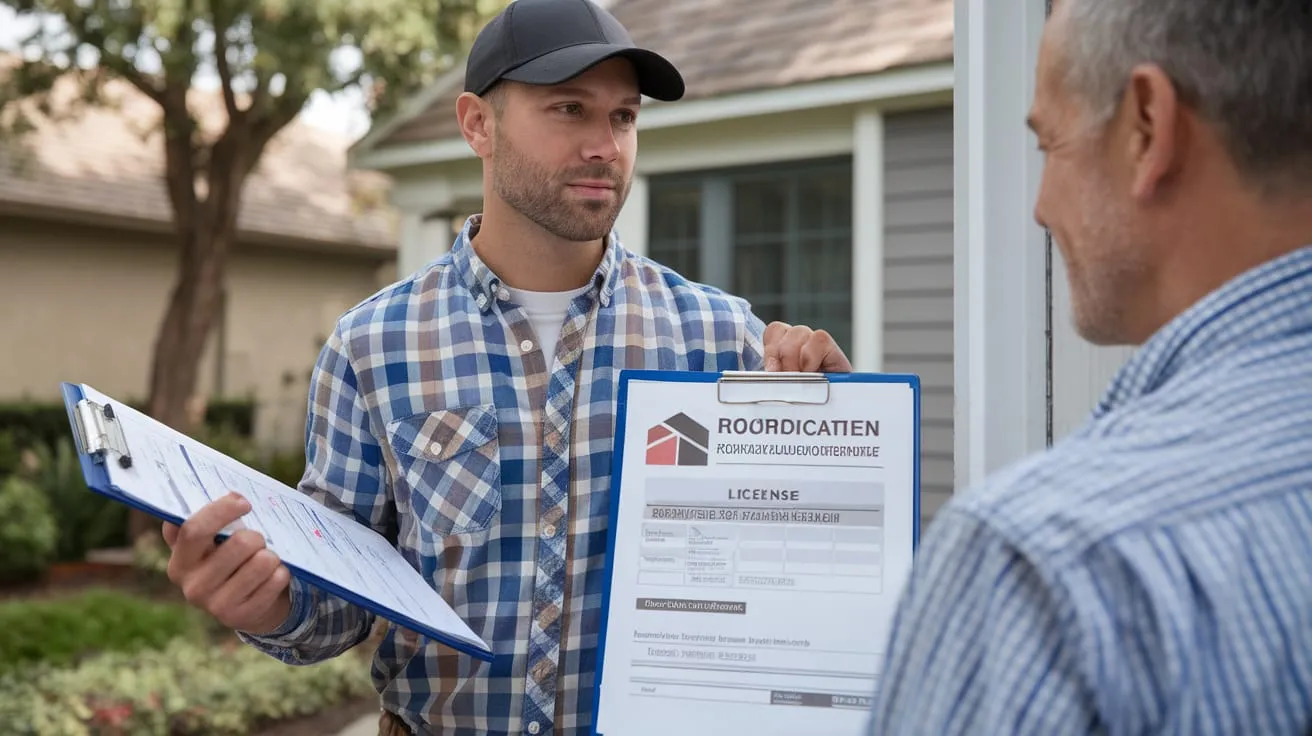
Fully licensed, bonded, and insured with workers' compensation on every job.
Certified & Factory-Trained
Factory-certified installers on every major product line, qualifying you for the strongest manufacturer warranties.
Warranty-Backed Work
10-year workmanship warranty plus up to 50-year manufacturer warranties on materials.
24/7 Emergency Service
Same-day emergency roof repair across the East Bay, with 24/7 live dispatch.
Locally Owned & Operated
Family-run since 1988, based in Concord. We don't subcontract, and we don't go anywhere.
Top Manufacturer Partners
Certified installers for GAF, Owens Corning, and CertainTeed roofing systems.
Get a free estimate from a licensed East Bay roofing contractor. Call (925) 722-4916
Flat Roof Realities
Flat roofs require more maintenance than sloped roofs. Debris doesn't wash off naturally. Drains can clog. Membrane seams can separate over time. Budget for annual inspections and cleaning, it's not optional. If you're comparing flat vs. sloped for a new build, sloped is lower maintenance. But for additions, commercial buildings, and modern architecture, flat roofing done right is absolutely viable.
Related Services
Torch Down Roofing
Modified bitumen, the proven standard for residential flat roof sections.
Learn MoreWe Serve 38 East Bay Cities
From Concord to Fremont, Oakland to San Ramon, East Bay Roofers covers the entire East Bay with same-day emergency dispatch.